Towards a healthier relationship with technology
Dear reader,
I have been trying to reform my relationship with technology. From filling small moments of boredom with algorithm-driven content to spending hours on end with my devices, these issues have bothered me for years. It was time to take charge and stop letting technology control me.
But reducing my usage has been a challenge. Our devices and many of the apps we rely on have been designed with addictiveness as a goal, so resistance with willpower isn’t enough. While this might work for a while, over time, I found myself opening my devices without a reason or checking a news site for the fifth time in a day. I wanted change that would persist.
First steps
I started by writing rules for how I wanted to use my devices. This felt empowering, and it was an improvement over the status quo. But this wasn’t sufficient. I was struggling to follow my rules. Still, I noticed a few positive developments.
When I stopped carrying my phone everywhere in the home, resisting its temptations became manageable. Reducing the number of notifications and adopting a minimal phone home screen made my usage more intentional. I had noticed before that having app icons on the home screen invited me to spend time with them when I hadn’t planned that. I can say the same thing about the Spotlight Search on iOS that suggests apps I use often; now there are no recommendations until I start typing.
Other changes were more radical, such as deleting the mail app from my phone. I don’t see why I would need constant access to my emails. It’s been nice to check them in the morning and be done with them for the day.
Apple’s Screen Time
When I became serious about the change, I knew I needed something to help me stick with my goals. Apple’s Screen Time felt like a potential solution and had the benefit of being built into the operating system. While my previous experiences with the feature had left me questioning its value, I found myself impressed by the options Apple offers. Yet, I was seeking something more powerful, so I began exploring alternatives.
Discovering ScreenZen
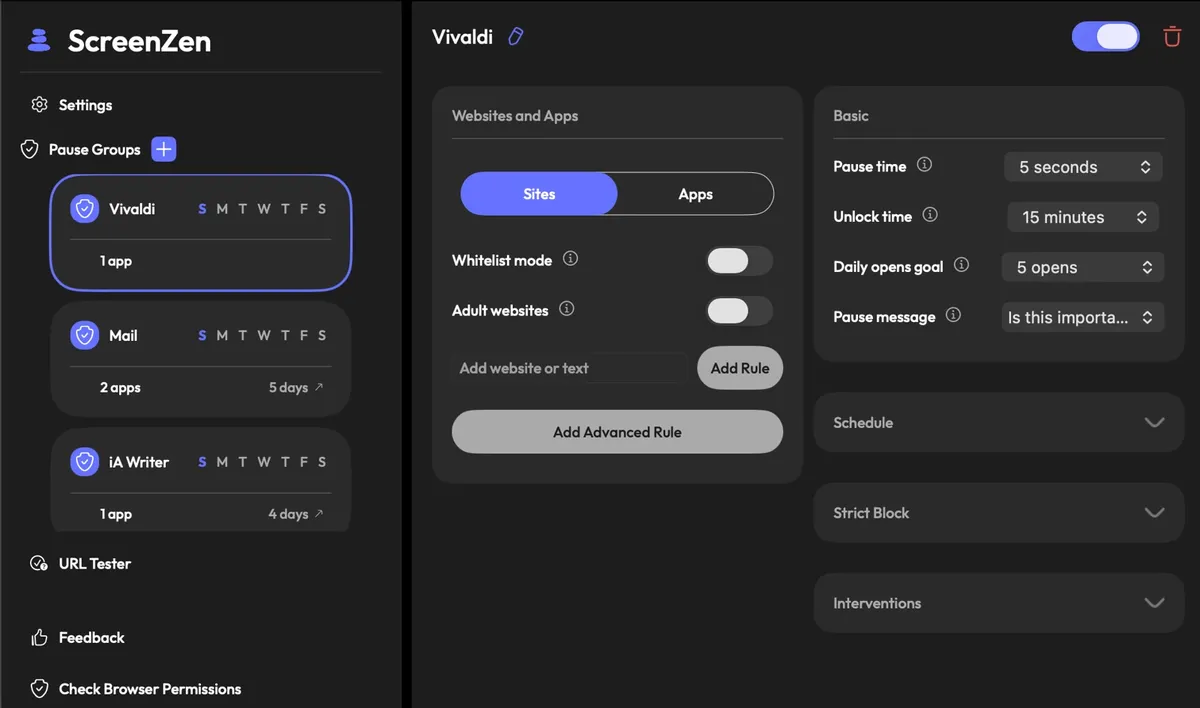
When I began testing ScreenZen, I ended up deleting the app shortly after, since I hadn’t understood its power. When my dissatisfaction with Apple’s Screen Time continued, I gave it another go. I’m glad I did. The app has helped me to make intentional choices about when and how much I use my devices. It is free to use, with a solid privacy policy.
The biggest benefit has been the ability to split the time I spend with an app into sessions. For example, I have six 20-minute sessions for Vivaldi. The cooldown feature improves this by allowing me to set a time I need to wait until I can reopen the app.
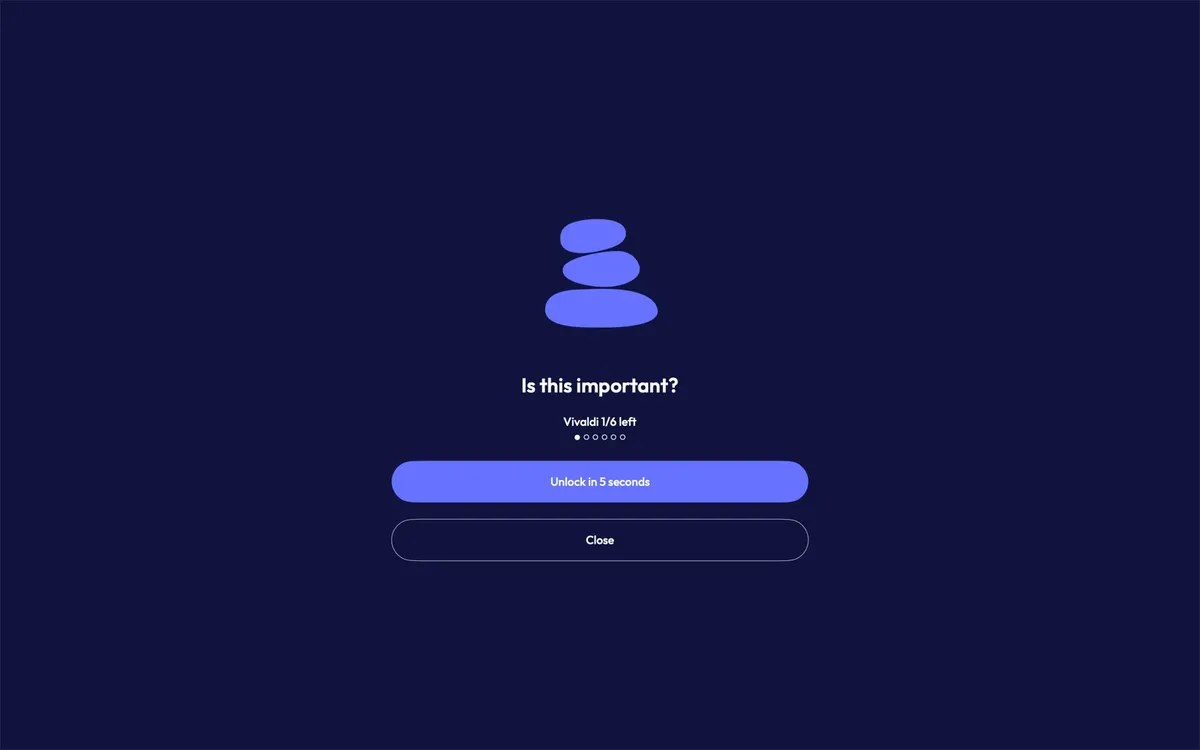
Setting daily limits on how many times I can open an app has fixed my habit of opening apps without a purpose. While Apple’s Screen Time includes something similar, it works only with time restrictions.
Challenges
The change hasn’t been without its difficulties. Briefly checking something can feel frustrating since this starts another session in ScreenZen. This has led me to spend more time with an app to get full use of the time. While on iOS you get an option for quick sessions that count as half, on macOS, the feature doesn’t exist. To combat this, I have added progressive web apps that aren’t counted towards the browser limit. In this way, I can access non-addictive sites such as dictionaries without initiating another browser session.
The issues with inconsistencies between the iOS and macOS versions go beyond quick sessions. While the iOS version lacks the option to limit individual websites outside of Safari, on macOS, this is possible with all browsers. Similarly, the cooldown feature isn’t available on macOS. Since I’m not using the Android or Windows versions, I’m unaware if these issues affect them.
I also wish that ScreenZen would sync everything via iCloud, so I could have unified limits on all my devices. This is how Apple’s Screen Time works if you enable the setting to share data across devices.
Final reflections
A behavioral scientist BJ Fogg has said that in order to break a habit, you need to remove one of the following from your behavior: the motivation, the ability, or any prompts that encourage you to act. With my changes, I have been able to address all three.
It’s been nice to notice that sitting in silence without constant stimulation has become easier, and something I enjoy. While ScreenZen has been a big asset, the revival of my daily yoga and meditation practices has equally contributed to this.
My relationship with screen time is still developing. Being aware of it can feel annoying, and exceeding the daily average feels disappointing. While reducing it has value, it’s important to recognize that not all screen time is bad. The way we use our devices is much more relevant. Doing research or writing this blog is a time well spent, unlike aimless scrolling on social media.
If this topic interests you, my advice is to start slow, adjust the goals if needed, and give the change enough time. Above all, be kind to yourself. 🌔